
Lightenup - where the Embodied Painting Practice Began
Lightenup is the inaugural series in my Embodied Painting practice. Inspired by the song “Lightenup,” these paintings mark the beginning of an ongoing exploration in which movement, music, and intuition become the process of painting.
Each work begins with an intentionally prepared surface. Organic lines and forms are created with glue and baking soda, producing a textured ground that is allowed to set before the painting begins. I then respond physically to the music through dance, allowing movement, rhythm, and gesture to guide the application of paint.
The resulting paintings are records of an embodied process—where the body becomes an instrument and movement becomes mark. Rather than planning the composition in advance, I allow the interaction between music, movement, texture, and intuition to shape the work as it unfolds.
Watch excerpts from the performance that gave rise to the series, then continue below to read the story behind the paintings.
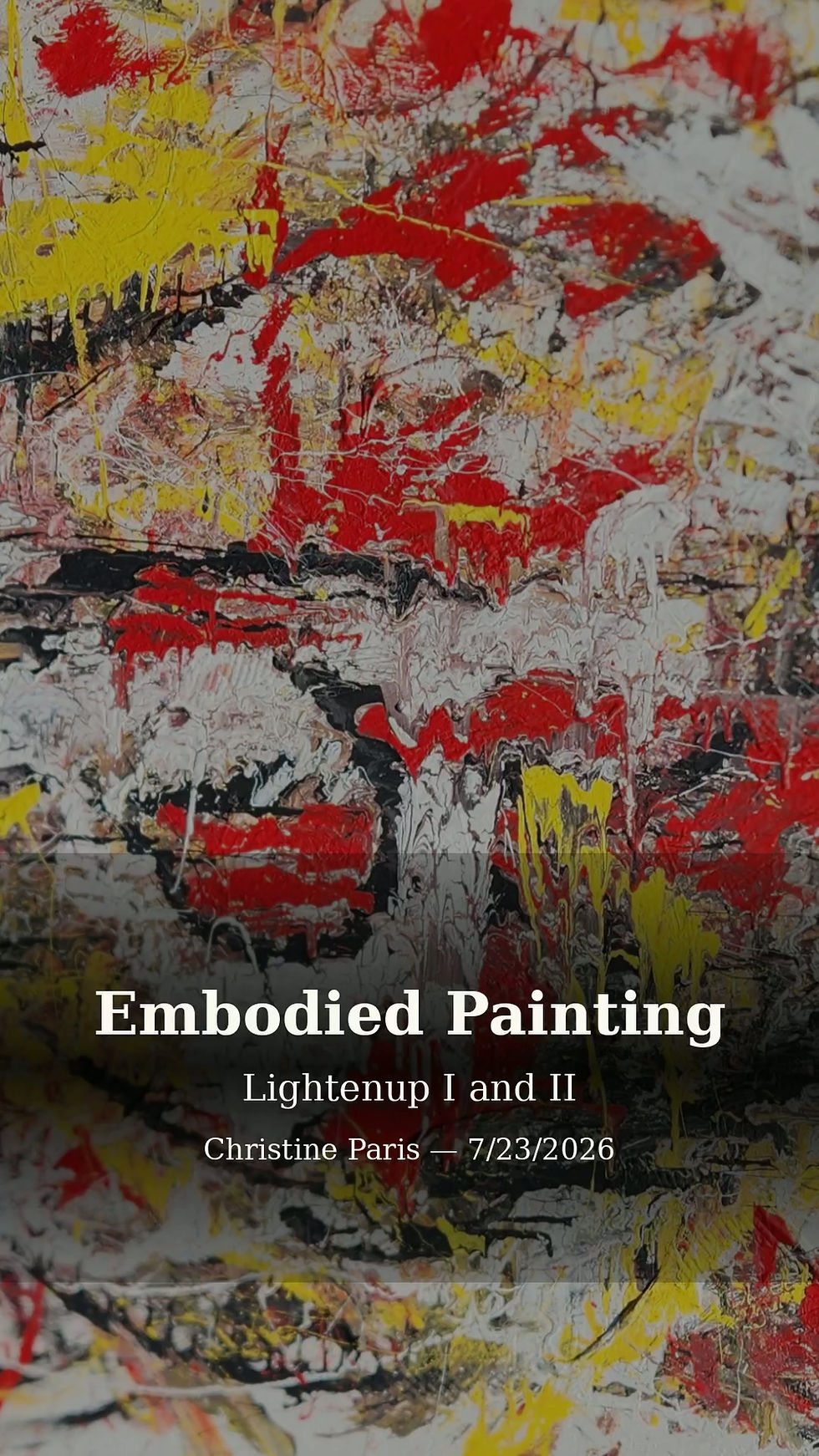
The paintings created through this process are shown below.

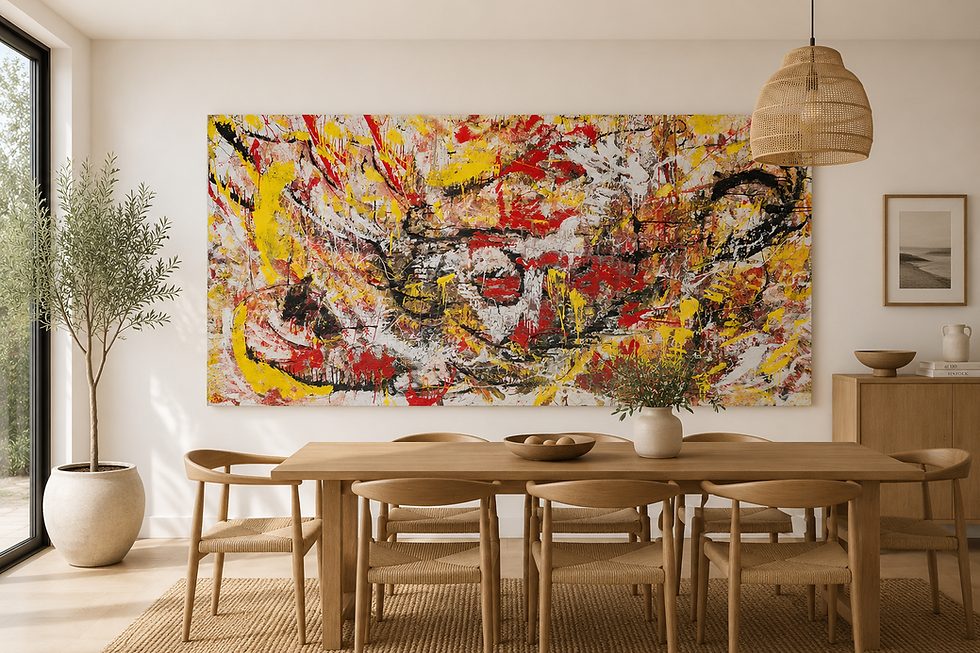
Lightenup I
Diptych — Acrylic, glue, baking soda on engineered wood panels (textured with glue/baking soda)
48" H x 96" W
-
Fully primed on front, back, and sides
-
Finished with a UV-protective archival clear coat
-
Ready to hang with an integrated French cleat hanging system
$2,500 for the diptych
Original artwork available for purchase.
For purchase inquiries, please use my Contact page.
Currently exhibited at Underground Society in Ann Arbor, Michigan
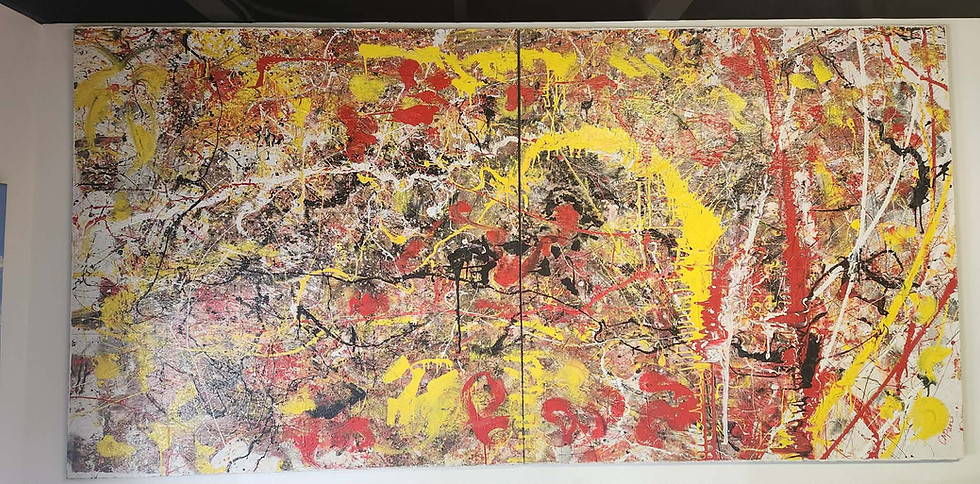

Lightenup I I
Diptych — Mixed media on engineered wood panels
48" H x 96" W
-
Fully primed on front, back, and sides
-
Finished with a UV-protective archival clear coat
-
Ready to hang with an integrated French cleat hanging system
$2,500 for the diptych
Original artwork available for purchase.
For purchase inquiries, please use my Contact page.
Currently exhibited at Underground Society in Ann Arbor, Michigan
Room settings are digital mockups and are intended to provide an approximate representation of the finished artwork
The Story Behind the Paintings
It started with a song
My partner, Jerry, sent it to me about six months ago, back when we were still in Florida — "Lightenup" by Parcels. It's simply a joyful song. I've listened to it more times than I could count, and it never stops doing the same thing to me: something in my chest lifts before my mind has caught up to why.
Then, about a month ago, the idea arrived in the middle of the night, fully formed, the way the best ones do. The next morning I told Jerry I wanted to dance and paint at the same time. I started researching — and Jerry sent me a video that cracked it open for me, a woman flamingo dancing in a long skirt, letting the fabric drag through paint and flick it across the canvas. It was magical. I kept looking and found others sliding through paint on the floor, dipping their feet and dancing it across the surface. Between all of it, I knew exactly what I wanted to try. I wanted to discover what would happen when I brought my own body, movement, and relationship with music into the painting.

Preparing the panels
Most of the dance painters I discovered worked on rolled canvas laid flat on the floor. I wanted something different—a surface I could lean into, push against, and even bounce away from. I wanted the painting to respond to my whole body, not just my hands.
I chose two engineered wood panels, each measuring 4x8 feet. Before adding any color, I built texture onto their surfaces, creating something that would catch the paint, resist it, and reveal unexpected marks as I moved across them.
One panel stood upright against the garage while the other lay flat on the ground. During the performance I discovered the floor panel became slippery underfoot, something I'll approach differently in future series. Like the paintings themselves, the process was teaching me as I went.


The red jumpsuit
Red, yellow, black, and white were the colors I had chosen for the paintings. I wore the red jumpsuit deliberately, knowing it would echo back into the work itself.
I never intended to keep it clean. As the paint accumulated, the jumpsuit became another surface for the performance—a record of the movement, just as the panels were. It wasn't something to protect from the process. It was something meant to become part of it.
One practical lesson emerged: wet paint and lightweight fabric aren't the best combination. Next time I'll choose a heavier jumpsuit—but I'll still expect it to become part of the artwork.


Surrendering
Before I began, I arranged everything I thought I might need within reach—paint, tools, even a set of nested measuring cups for scooping and flinging colour across the panels. I wanted to be free to keep moving without stopping to think.
But once the music started, almost none of that preparation mattered in the way I expected.
The song carried me.
Instead of deciding what to do next, I found myself responding to rhythm, movement, and the paint itself. The process became less about making decisions and more about paying attention.
At one point, Jerry handed me a leafy branch from the garden. Without thinking, I dipped it into the paint and let it become part of the dance, leaving marks I never could have planned.


What surprised me
I'd planned the performance around two versions of the song, lasting about eleven minutes in total. I assumed that would be the performance. Instead, when the songs ended and the playlist continued, I kept dancing and painting for another twenty minutes or so, turning the panels to let the paint run, drip, and find new directions. I had assumed the song would shape the experience from beginning to end. Instead, it opened the door. After that, the painting had a momentum of its own.
By the end, the panels weren't the only things transformed. The same marks that covered the paintings covered my skin, my socks, and the soles of my feet.
What I learned
Lightenup taught me that once I surrender control, the painting knows more than I do.
I no longer think of these works as compositions I create, but as records of where music, movement, and intuition lead me. Every Embodied Painting series begins with a piece of music that becomes the catalyst for movement and painting, but what emerges can never be fully planned. That realization became the foundation of my Embodied Painting practice.